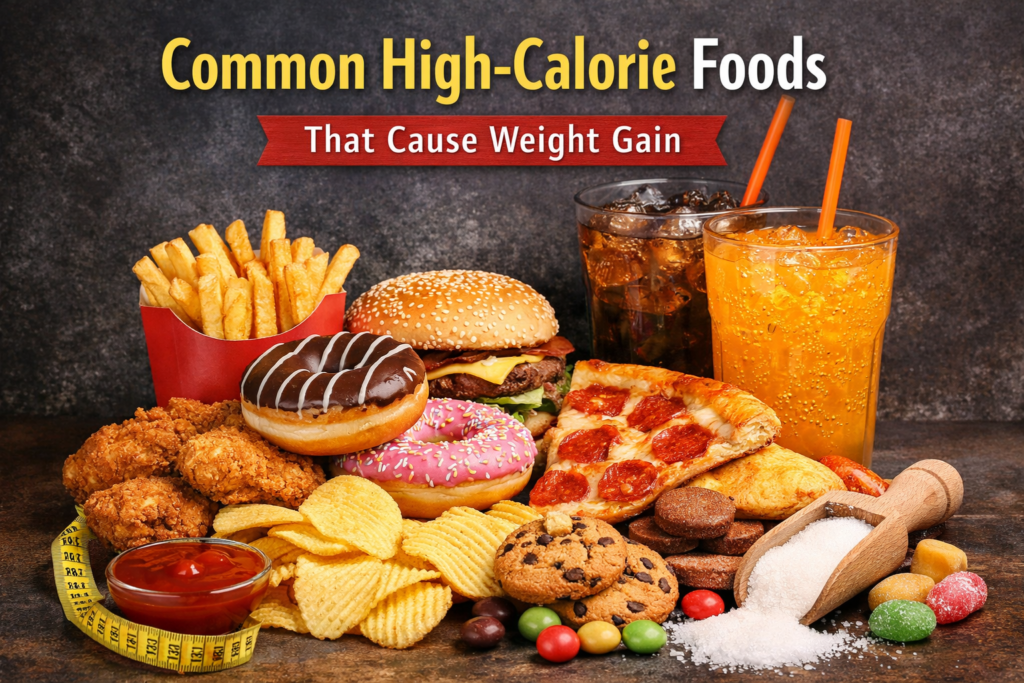
Common high-calorie foods are a major contributor to gradual weight gain, especially when consumed frequently and in large portions.
Weight gain often happens quietly. Many people believe they are eating “normally,” yet their weight continues to increase. In most cases, the issue is not a single meal but frequent consumption of high-calorie foods that do not keep the body full.
This article explains the most common high-calorie foods that cause weight gain, why they are problematic, and how to manage them wisely.
👉 This post supports our main guide:
Calories and Weight Gain: What You Should Know
Table of Contents
ToggleWhat Makes a Food High in Calories?
High-calorie foods usually share similar characteristics. Understanding common high-calorie foods helps reduce excess calorie intake and supports healthy weight management. According to the World Health Organization, excess calorie intake is a major contributor to overweight and obesity worldwide.
Key Features of High-Calorie Foods
High in sugar
High in unhealthy fats
Made from refined carbohydrates
Low in fibre and protein
Why This Matters
These foods provide a lot of energy in small portions but do not satisfy hunger, making overeating more likely. The NHS explains that consuming more calories than the body burns leads to gradual weight gain over time.
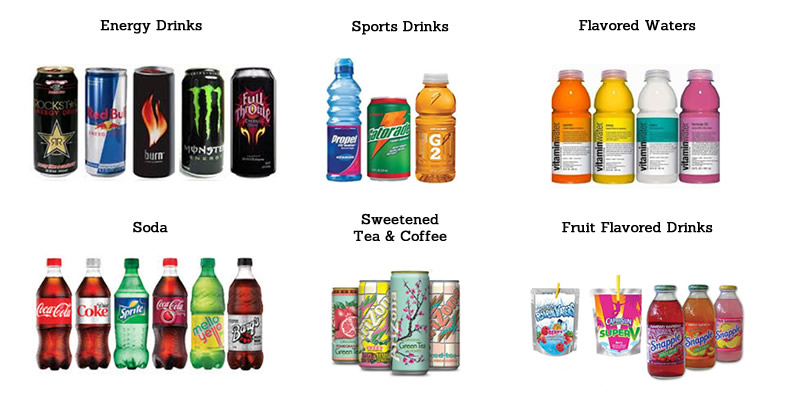
Sugary Drinks
Sugary drinks are one of the largest hidden sources of excess calories.
Common Sugary Drinks
Soft drinks
Sweetened fruit juices
Energy drinks
Sweetened tea and coffee
How They Cause Weight Gain
Liquid calories do not trigger fullness. You can consume hundreds of calories without feeling satisfied, leading to excess calorie intake.
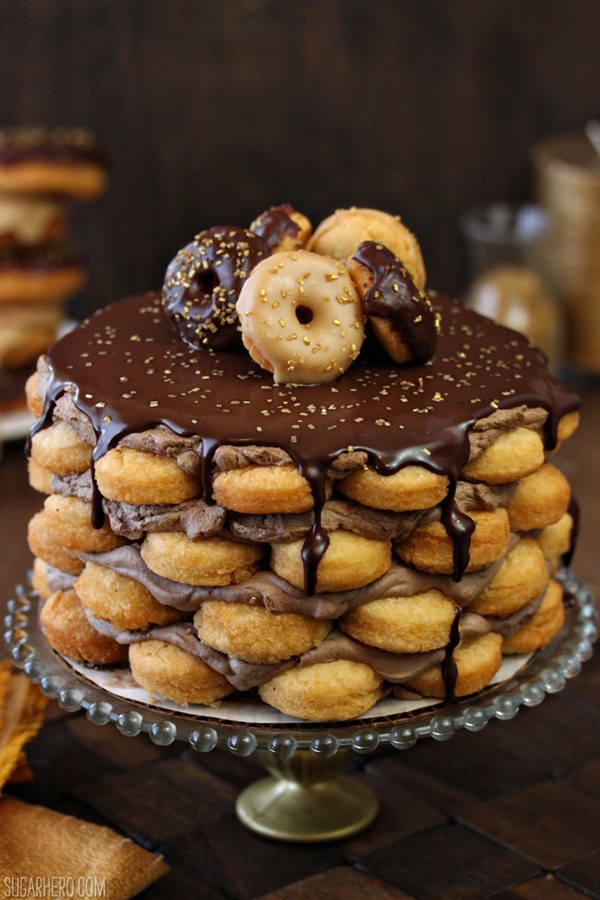
Pastries and Baked Goods
Pastries combine sugar, refined flour, and fat, making them extremely calorie-dense.
Examples
Doughnuts
Cakes
Biscuits
Meat pies
The Weight Gain Effect
These foods spike blood sugar quickly and encourage fat storage, especially when eaten regularly.
Fried Foods
Fried foods absorb large amounts of oil during cooking.
Common Fried Foods
Fried chicken
French fries
Puff-puff
Akara
Why Fried Foods Are a Problem
Oil significantly increases calorie content. Regular intake contributes to belly fat and overall weight gain.
Fast Foods
Fast foods are designed to be tasty, filling, and convenient—but they are often very high in calories.
Popular Fast Foods
Burgers
Pizza
Shawarma
Fried rice from fast-food outlets
Portion Size Problem
Fast-food portions are usually much larger than what the body needs, leading to calorie surplus.
Processed Snacks
Processed snacks are easy to overeat because they are low in fibre and protein.
Common Processed Snacks
Chips
Crackers
Sausage rolls
Why They Encourage Overeating
They are designed to be addictive and rarely keep you full, leading to frequent snacking.
Large Portions of Refined Carbohydrates
Refined carbohydrates are not harmful on their own, but portion size matters.
Examples
White rice
White bread
Pasta
Garri
The Hidden Calorie Trap
Large portions quickly increase calorie intake, especially when paired with sugary drinks or fried foods.
.
Sugary Breakfast Foods
Many breakfast foods appear healthy but are high in sugar and calories.
Examples
Sugary cereals
Sweetened yoghurt
White bread with sugary spreads
Why Breakfast Matters
High-sugar breakfasts increase hunger later in the day, leading to overeating.
Why These Foods Lead to Weight Gain
Harvard Health Publishing highlights that calorie-dense processed foods increase the risk of weight gain.
Combined Effects
Increase calorie intake
Promote fat storage
Encourage frequent eating
Long-Term Impact
Over time, these habits lead to steady weight gain, especially around the abdomen.
Healthier Ways to Manage High-Calorie Foods
The CDC reports that frequent intake of high-calorie foods contributes to obesity and metabolic disorders.
Simple Practical Tips
Replace sugary drinks with water or unsweetened tea
Choose grilled or baked foods instead of fried
Increase vegetables and protein
Reduce portion sizes
Sustainable Approach
You don’t need to avoid these foods completely—moderation and awareness are key.
Conclusion
Weight gain is rarely caused by one food or one meal. It is usually the result of frequent exposure to high-calorie foods over time. Learning to identify these foods empowers you to make better choices and manage your weight naturally.
👉 For a deeper understanding, read our main guide:
Calories and Weight Gain: What You Should Know
You can consume hundreds of calories without feeling satisfied, it lead’s to excess calorie intake eg, sport drinks and others
Yes. Weight gain is rarely caused by one food or one meal but learning to identify these food’s empowers you to make a better choices and manage your weight naturally.
Thanks for your response s
We should be mindful of what food we eat. It’s really helpful to know what hidden high calorie foods are out there. Thanks for sharing this!