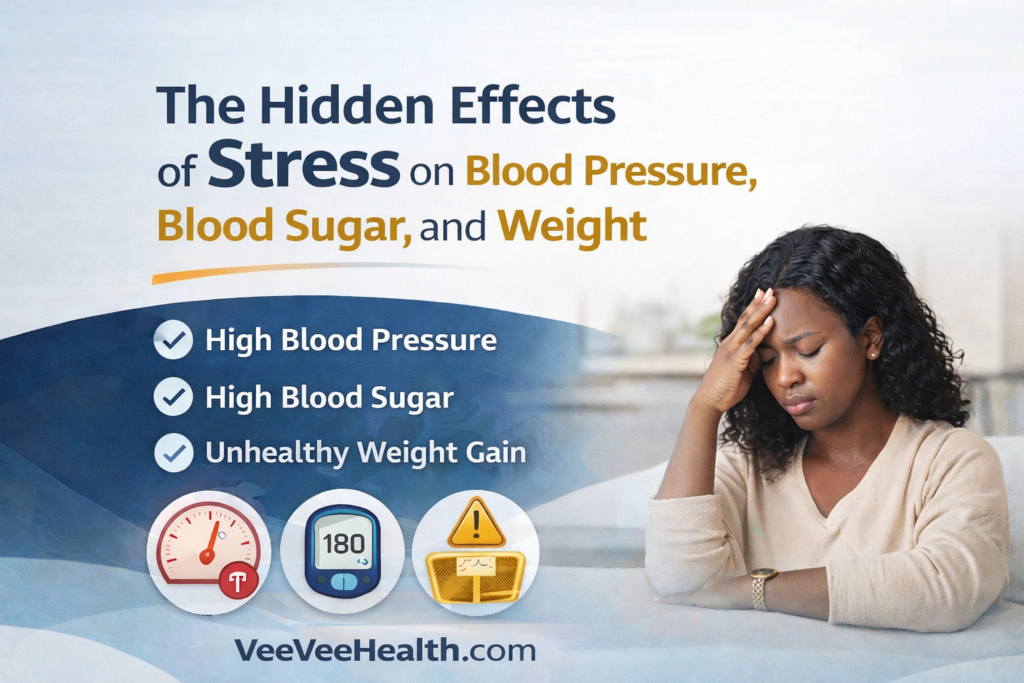
Effects of stress on blood pressure, blood sugar, and weight are often overlooked, yet chronic stress plays a powerful role in the development of hypertension, blood sugar imbalance, and unhealthy weight gain. While stress is a normal part of life, prolonged exposure can disrupt hormones, damage metabolic health, and silently increase disease risk.
What most people donβt know is that stress does not only affect mental health. Long-term stress has a direct and powerful impact on blood pressure, blood sugar levels, and body weight. Even people who eat βwellβ or try to stay active may still struggle with hypertension, high blood sugar, or stubborn belly fat if stress is left unmanaged.
In this article, we explore how stress affects blood pressure, blood sugar, and weight, why these conditions are closely connected, and what you can do to protect your health.
Research shows that the effects of stress on blood pressure, blood sugar, and weight are closely linked through hormonal and metabolic pathways, especially cortisol and insulin resistance.
Table of Contents
ToggleWhat Is Stress?
Stress is the bodyβs response to any demand or challenge. When you perceive a threatβphysical, emotional, or psychologicalβthe brain signals the release of stress hormones, mainly cortisol and adrenaline. Chronic stress increases cortisol levels, which has been shown to raise blood pressure and blood sugar over time (American Heart Association, 2023).
There are two main types of stress:
Acute stress: Short-term stress, such as rushing to meet a deadline or reacting to sudden danger.
Chronic stress: Ongoing stress that lasts weeks, months, or even years, often linked to work pressure, financial strain, caregiving, or unresolved emotional issues.
While acute stress can be helpful in short bursts, chronic stress keeps the body in a constant βfight or flightβ mode, which gradually disrupts normal metabolic processes. The effects of stress on blood pressure, blood sugar, and weight often begin silently, long before symptoms become obvious.
The effects of stress on blood pressure, blood sugar, and weight often begin silently, making them easy to ignore until serious health problems develop.
How Stress Raises Blood Pressure
One of the clearest physical effects of stress is its impact on blood pressure.
When you are stressed:
Blood vessels tighten
Heart rate increases
Blood pressure rises temporarily
This response is meant to help you react quickly in dangerous situations. However, when stress becomes chronic, blood vessels remain constricted more often than they should. Over time, this contributes to persistently high blood pressure. Long-term stress is also linked to weight gain through hormonal imbalance and emotional eating patterns (Harvard Health Publishing, 2024).
Chronic stress can also:
Increase inflammation in blood vessels
Encourage unhealthy coping habits such as overeating, smoking, or alcohol use
Reduce sleep quality, which further worsens blood pressure control
This is why many people with hypertension notice their readings worsen during periods of emotional or psychological stressβeven when medication and diet remain unchanged.
Managing stress effectively can reduce the harmful effects of stress on blood pressure, blood sugar, and weight, improving overall health and quality of life. Understanding the effects of stress on blood pressure, blood sugar, and weight helps explain why stress-related hypertension is becoming more common.
π Β High Blood Pressure: Causes, Symptoms, and Management
How Stress Raises Blood Sugar Levels
Stress has a direct and often overlooked effect on blood sugar.
When cortisol is released, it signals the liver to release glucose into the bloodstream. This is meant to provide quick energy in emergency situations. However, during chronic stress, this glucose release happens repeatedly, even when the body does not need extra energy.
Over time, this leads to:
Frequent blood sugar spikes
Reduced insulin sensitivity (insulin resistance)
Increased risk of prediabetes and type 2 diabetes
People under long-term stress may notice:
Higher fasting blood sugar readings
Blood sugar fluctuations despite eating βhealthyβ
Increased cravings for sugary or refined foods
Stress can therefore worsen existing diabetes or silently push someone toward diabetes without obvious symptoms. These findings highlight the long-term effects of stress on blood pressure, blood sugar, and weight, especially in people at risk of diabetes.
Stress, Cortisol, and Weight Gain
One of the most frustrating effects of chronic stress is unexplained weight gain, especially around the abdomen.
Cortisol plays a major role in this process. High cortisol levels:
Promote fat storage, particularly belly fat
Increase appetite and cravings for high-calorie foods
Disrupt hunger hormones such as leptin and ghrelin
Interfere with sleep, further worsening weight gain
This is why many people say:
βI donβt eat much, but I keep gaining weight.β
Stress-related weight gain is not just about caloriesβit is hormonal and metabolic. Belly fat itself then releases inflammatory substances that worsen insulin resistance and blood pressure, creating a vicious cycle.
Why Stress Links Blood Pressure, Blood Sugar, and Weight Together
Stress acts as a common root cause linking these three conditions.
Hereβs how the cycle works:
Stress raises cortisol
Cortisol increases blood sugar
High blood sugar promotes insulin resistance
Insulin resistance encourages fat storage
Belly fat worsens blood pressure and inflammation
Poor health increases stress even further
This interconnected process is often referred to as metabolic syndrome, where high blood pressure, high blood sugar, excess belly fat, and abnormal cholesterol occur together. Understanding the effects of stress on blood pressure, blood sugar, and weight is essential for preventing long-term metabolic and cardiovascular complications.
πΒ Metabolic Syndrome Explained: How Blood Pressure, Blood Sugar, and Fatty Liver Are Connected
.
Signs Stress Is Affecting Your Health
Stress may be harming your blood pressure, blood sugar, and weight if you experience:
Persistently high blood pressure despite medication
Blood sugar spikes without clear dietary triggers
Fatigue and poor concentration
Increased belly fat
Sugar cravings, especially during emotional stress
Poor sleep or frequent waking at night
These signs are often dismissed, but they are important signals from the body.
Practical Ways to Reduce Stress and Protect Your Health
Managing stress is not a luxuryβit is a medical necessity for metabolic health.
1. Prioritise Sleep
Aim for 7β9 hours of quality sleep. Poor sleep raises cortisol and worsens blood pressure and blood sugar control.
2. Move Your Body Daily
Regular movement lowers stress hormones and improves insulin sensitivity. Even walking helps.
3. Eat Balanced Meals
Protein, fibre, and healthy fats help stabilise blood sugar and reduce stress-related cravings.
4. Set Boundaries
Chronic stress often comes from overcommitment. Learning to say no protects both mental and physical health.
5. Practice Simple Relaxation
Deep breathing, prayer, meditation, or quiet time can significantly reduce cortisol levels.
If stress is accompanied by:
Persistently high blood pressure
Rising blood sugar levels
Rapid weight gain
Extreme fatigue or mood changes
It is important to seek medical evaluation. Early intervention can prevent long-term complications.
When to Seek Medical Advice
If stress is accompanied by:
Persistently high blood pressure
Rising blood sugar levels
Rapid weight gain
Extreme fatigue or mood changes
It is important to seek medical evaluation. Early intervention can prevent long-term complications. Understanding the effects of stress on blood pressure, blood sugar, and weight can help prevent long-term metabolic and cardiovascular damage.
Final Thoughts
Stress is not just βin the mind.β It has real, measurable effects on blood pressure, blood sugar, and weight. Ignoring chronic stress allows silent damage to build over time.
The good news is that stress management is powerful medicine. By addressing stress alongside nutrition, movement, and medical care, you can protect your heart, metabolism, and overall wellbeing.
Addressing the effects of stress on blood pressure, blood sugar, and weight is essential for preventing long-term metabolic and cardiovascular complications. Managing the effects of stress on blood pressure, blood sugar, and weight is a critical step in protecting long-term metabolic and heart health.
If stress, blood pressure, blood sugar, or weight gain are affecting your health, you donβt have to manage it alone.
π Visit VeeVeeHealth.com for evidence-based health education
π Book a personalised consultation for practical guidance
π Subscribe to stay informed on metabolic and lifestyle health
.
We can manage stress effectively to reduce the harmful effects of stress on blood pressure, blood sugar and weight.but if stress , blood pressure,blood sugar or weight gain are affecting your health then you don’t have to keep it to yourself.
We have to seek for medical advice if stress is acompanied by mood changes or extreme fatigue . It’s very important because early intervention can prevent long-term complications
Thanks for sharing,veevee health
Don’t let stress get the best of you, stay on top blood pressure, blood sugar and lost of weight.
We know how bad stress is , especially when you feel like you are managing everything but it’s just not working out take care of yourself.