Mental Health Education in Nigeria: Evidence, Awareness, and Public Health

A Comprehensive Pillar Guide by Vivian Okpala

Mental health education and awareness in Nigeria as a public health priority

Mental health education in Nigeria is a critical but often overlooked component of public health, despite its growing importance for awareness, prevention, and early intervention.While mental health conditions affect millions of Nigerians across all age groups, awareness, understanding, and early intervention remain limited. Cultural stigma, poor policy implementation, and lack of structured mental health education have contributed to widespread misconceptions and untreated psychological distress.

At VeeVee Health, mental health education is grounded in evidence and public health research. My academic journey—from assessing the implementation of workplace safety legislation during my Master’s degree to my ongoing PhD research on mental health education among National Youth Service Corps (NYSC) members in Anambra State—has reinforced one clear truth: education improves knowledge, shapes attitudes, and supports healthier mental health outcomes.

This pillar post explores the evidence behind mental health education in Nigeria, the current state of awareness, and why a public health approach is essential for sustainable change.

Public health focuses on preventing disease, promoting health, and prolonging life through organised societal efforts. Mental health education fits squarely within this framework. It equips individuals with coping strategies, improves emotional literacy, and encourages healthier behaviours before conditions worsen. From a public health perspective, mental health education in Nigeria plays a vital role in reducing stigma, improving mental health knowledge, and supporting early help-seeking behaviour.

In Nigeria, mental health services are often reactive rather than preventive. Mental health education shifts the focus toward prevention by empowering people with knowledge and practical tools. When individuals understand mental health, they are more likely to seek help early, support others, and challenge harmful beliefs.

Integrating mental health education into schools, workplaces, youth programmes, and community settings is essential for sustainable public health impact. Mental health education in Nigeria remains essential for addressing stigma, improving knowledge, and strengthening population-level mental well-being.

According to the World Health Organization, mental health is an integral part of overall health and well-being, influencing how people think, feel, act, and cope with life stressors.

Mental health education in Nigeria plays a preventive role by helping individuals understand emotional well-being before mental health challenges escalate into severe conditions. Public health strategies increasingly recognise that education is one of the most cost-effective ways to reduce the burden of mental illness, especially in low- and middle-income countries.

When people are educated about mental health, they are more likely to identify symptoms early, seek appropriate care, and support others within their communities. This reduces delays in treatment, lowers stigma, and improves long-term outcomes. From a public health perspective, mental health education strengthens resilience at both individual and population levels.

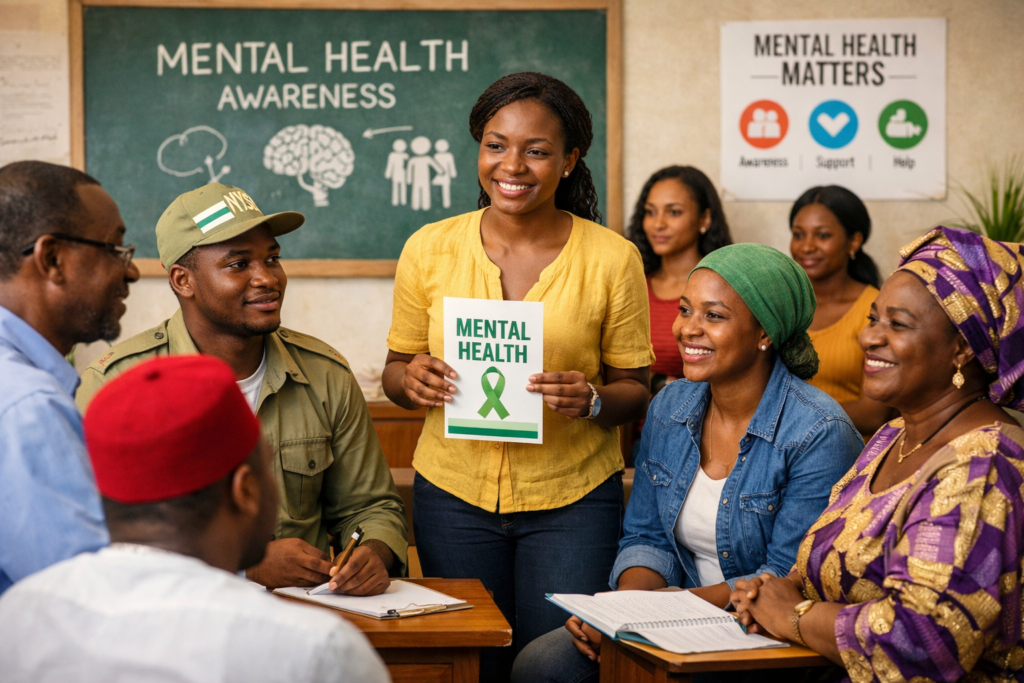
Mental Health Awareness in Nigeria

Mental health awareness in Nigeria remains low despite increasing prevalence of stress, anxiety, depression, and substance-related disorders. Many people experience mental distress daily without recognising it as a health issue. Others normalise chronic stress due to economic hardship, unemployment, and social pressures.

Low awareness is further compounded by limited public education campaigns and minimal mental health content in school curricula. As a result, mental health conditions are often misunderstood, ignored, or addressed only at crisis stages.

Improving awareness through education can significantly change how mental health is perceived and managed across communities. Mental health conditions account for a growing public health burden in Nigeria, yet access to services and education remains limited, particularly at the community level.

Cultural Beliefs and Mental Health Stigma

Stigma remains one of the greatest barriers to mental health care in Nigeria. Cultural beliefs often frame mental illness as spiritual punishment, personal weakness, or moral failure. These beliefs discourage open discussion and delay help-seeking behaviour.

Mental health education plays a crucial role in reducing stigma by providing factual information and reframing mental illness as a health condition rather than a character flaw. Education also helps families and communities become more supportive, reducing discrimination and isolation experienced by those affected.

Addressing stigma requires culturally sensitive education that respects local beliefs while promoting evidence-based understanding. Strengthening mental health education in Nigeria requires coordinated efforts across schools, workplaces, youth programmes, community settings, and public health systems.

Mental Health Education in Schools and Tertiary Institutions

Schools and tertiary institutions provide a strategic platform for mental health education in Nigeria. Young people spend a significant portion of their developmental years in educational settings, making these spaces ideal for building emotional awareness, coping skills, and positive attitudes toward mental health.

Introducing structured mental health education into school curricula can help students recognise stress, anxiety, and emotional distress early. It also normalises conversations around mental health, reducing stigma from a young age. In tertiary institutions, mental health education supports students navigating academic pressure, identity development, and future uncertainty.

Embedding mental health education into formal learning systems contributes to healthier transitions into adulthood and promotes long-term well-being.

Workplace Mental Health and Policy Implementation

Workplaces significantly influence mental well-being. Long working hours, unsafe environments, job insecurity, and poor labour regulation enforcement contribute to stress and burnout among Nigerian workers.

My Master’s degree research focused on the Assessment of the Implementation of the Nigerian Factories Act on Workers in Industries in Anambra State. The study highlighted how weak enforcement of occupational health and safety regulations increases physical and psychological stress among workers.

This evidence underscores the importance of integrating mental health education into workplace policies, training programmes, and labour law enforcement. Healthy workplaces are essential for productivity, safety, and overall well-being.

Beyond physical safety, workplace mental health education equips workers with skills to manage stress, recognise burnout, and seek support without fear of discrimination. Employers who prioritise mental health education often experience improved productivity, reduced absenteeism, and better employee engagement.

In the Nigerian context, integrating mental health education into occupational health programmes can complement existing labour laws. Education bridges the gap between policy and practice by ensuring that workers understand their rights, responsibilities, and available support systems.

Mental Health Education Among Young Adults and NYSC Members

My doctoral research, which has now been concluded, examined the role of structured peer-led education in improving mental health awareness among young adults. The study was titled:

“Effects of Peer Health Education on Mental Health Knowledge and Attitude Towards Mental Illness among National Youth Service Corps (NYSC) Members in Anambra State, Nigeria.”

The research assessed how peer health education influences mental health knowledge and attitudes toward mental illness among NYSC members—a population often exposed to significant psychological stress during a period of major life transition.

Findings from the study demonstrated that peer health education significantly improved mental health knowledge and positively influenced attitudes toward mental illness. Participants showed increased awareness, reduced stigma, and greater openness toward mental health discussions following the educational intervention. These outcomes highlight peer education as an effective, culturally appropriate, and scalable strategy for mental health promotion among young people in Nigeria.

This evidence further supports the integration of structured mental health education into youth programmes, community initiatives, and national service settings as part of a broader public health approach.

Peer-led health education is particularly effective among young adults because it encourages openness, relatability, and trust. When mental health information is delivered by peers, participants are more likely to engage, ask questions, and reflect on their own experiences.

This approach aligns with public health principles that emphasise community participation and empowerment. The success of peer health education among NYSC members highlights its potential for wider application in youth programmes, campuses, and community initiatives across Nigeria.

Early Signs of Mental Health Challenges

Mental health conditions often develop gradually. Early recognition allows for timely support and better outcomes. Common warning signs include:

  • Persistent sadness or low mood

  • Excessive worry or fear

  • Irritability or emotional outbursts

  • Sleep disturbances

  • Chronic fatigue

  • Difficulty concentrating

  • Social withdrawal

Mental health education helps individuals identify these signs early and respond appropriately.

The Role of Community and Digital Education

Mental health education should extend beyond hospitals and clinics. Community-based and digital platforms play a critical role in expanding access, especially in settings with limited mental health professionals.

Community programmes, faith-based organisations, youth groups, and digital health platforms can all serve as channels for mental health education. This aligns with the VeeVee Health approach—using digital education to reach wider audiences with culturally relevant, evidence-based information.

Digital platforms have further expanded access to mental health education by overcoming geographical and social barriers. Online health education allows individuals to learn privately, at their own pace, and in culturally relevant ways. This is particularly important in settings where stigma discourages face-to-face discussions.

Digital mental health education complements traditional community-based approaches by reaching wider audiences and supporting continuous learning.

Strengthening Mental Health Education in Nigeria

To improve mental health outcomes nationwide, Nigeria must prioritise:

  • Integration of mental health education into school curricula

  • Workplace mental health policies and training

  • Youth-focused mental health programmes

  • Community-based awareness initiatives

  • Digital mental health education platforms

A coordinated public health approach can significantly reduce the burden of mental health conditions and improve quality of life. Recent policy efforts, such as Nigeria’s Mental Health Act, signal progress, but effective implementation must be supported by widespread mental health education and public awareness.

Conclusion

Mental health education is one of the most effective tools for improving mental well-being in Nigeria. By increasing awareness, reducing stigma, and promoting early intervention, education empowers individuals and communities to take control of their mental health.

Strengthening mental health education in Nigeria requires coordinated efforts across schools, workplaces, youth programmes, and public health systems.

This pillar post serves as the foundation for ongoing mental health education, research translation, and advocacy on VeeVee Health. Strengthening mental health education in Nigeria requires coordinated efforts across schools, workplaces, youth programmes, and public health systems.

âť“ FAQs

What is mental health education?

Mental health education involves teaching individuals and communities about mental well-being, mental health conditions, early warning signs, coping strategies, and when to seek professional help.

Why is mental health education important in Nigeria?

It improves awareness, reduces stigma, promotes early intervention, and supports healthier attitudes toward mental health in a context where misconceptions remain widespread.

How does mental health education reduce stigma?

By providing accurate information and normalising mental health discussions, education challenges harmful beliefs and encourages supportive attitudes.

Who needs mental health education the most?

Everyone benefits, but priority groups include young people, workers, students, NYSC members, and communities with limited access to mental health services.

Can mental health education prevent mental illness?

While not all conditions can be prevented, education significantly reduces risk, supports early detection, and improves coping and resilience.t

How can mental health education be delivered effectively?

Through schools, workplaces, community programmes, digital platforms, and public health campaigns.
Share this post

13 thoughts on “Mental Health Education in Nigeria: Evidence, Awareness, and Public Health”

  1. Pingback: What Is Mental Health Education? Meaning, Importance, and 5 Essential Benefits

  2. Mental health conditions affect millions of people across All age ,due to lack of structured mental health education have contributed to widespread misconception and untreated phycologycal distress. also it can be delivered through school etc.

  3. Mental health conditions affect millions of people across All age , also it can be delivered through school etc.

    1. Mental health conditions affect millions of people across All age ,due to lack of structured mental health education have contributed to widespread misconception and untreated phycologycal distress. also it can be delivered through school etc

  4. Flexyekene.blogspot.com

    Through education, storytelling, and safe dialogue, we’re creating a culture where mental health is valued, and stigma is broken—one community at a time.
    đź”— Join us in making mental health a priority for every child and youth across Nigeria.

Leave a Comment

Your email address will not be published. Required fields are marked *

Scroll to Top