Table of Contents
ToggleIntroduction
Chronic diseases are now the leading cause of death worldwide, accounting for over 70% of global deaths each year (World Health Organization, 2023). Conditions such as high blood pressure, type 2 diabetes, fatty liver disease, and obesity often develop gradually and silently, making early prevention essential.
Preventive health shifts the focus from treating disease after diagnosis to addressing risk factors early through lifestyle changes, education, and regular health monitoring (Centers for Disease Control and Prevention, 2022). At its core, preventive health empowers individuals to take control of their wellbeing before complications arise.
What Is Preventive Health?
Preventive health refers to actions taken to avoid disease, detect health risks early, and reduce long-term complications. It includes primary prevention (preventing disease onset), secondary prevention (early detection), and tertiary prevention (reducing complications) (WHO, 2023).
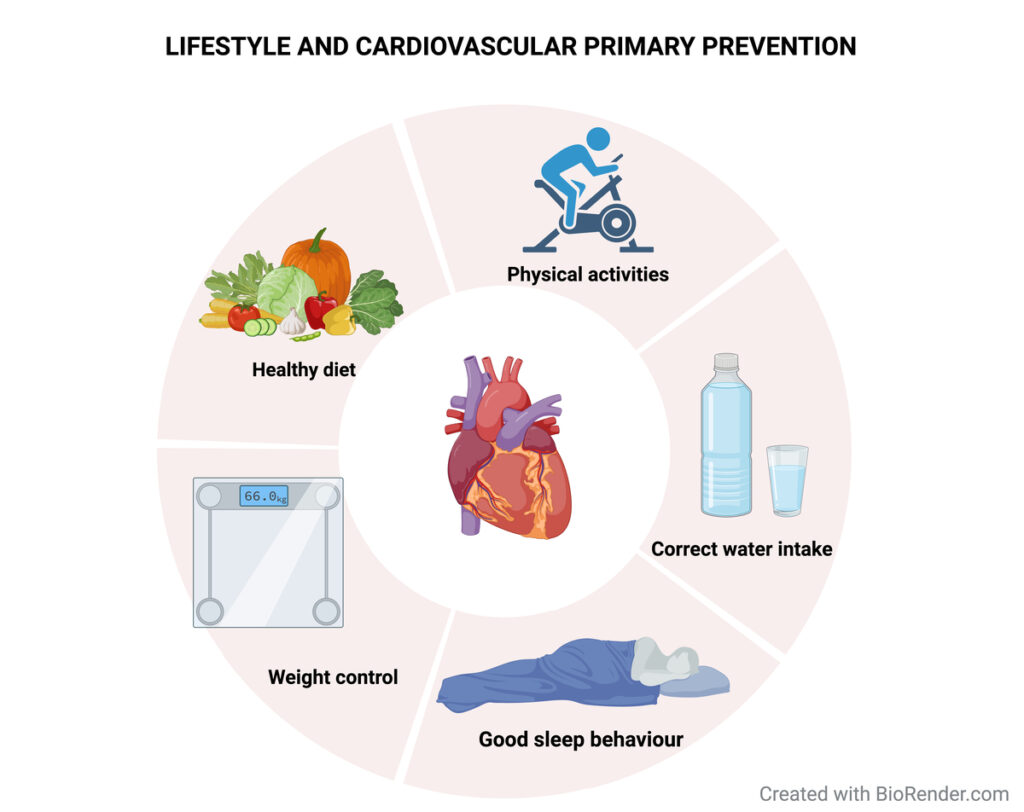
Examples include regular blood pressure checks, balanced nutrition, physical activity, stress management, and health education that supports informed decision-making.
Why Many Chronic Diseases Are Preventable
Research shows that most non-communicable diseases are strongly linked to modifiable lifestyle factors such as poor diet, physical inactivity, smoking, and chronic stress (GBD 2019 Risk Factors Collaborators, 2020).
For instance, sustained improvements in diet and physical activity have been shown to significantly reduce the risk of developing type 2 diabetes and hypertension (Knowler et al., 2002). These findings highlight that early lifestyle intervention can alter disease trajectories long before medication becomes necessary.
Preventive Health and Metabolic Health
Metabolic health refers to how efficiently the body regulates blood sugar, cholesterol, blood pressure, and fat storage. Poor metabolic health is associated with increased risk of cardiovascular disease, diabetes, and fatty liver disease (Saklayen, 2018).
Preventive health strategies such as regular physical activity and improved dietary patterns help restore metabolic balance and reduce insulin resistance (Eckel et al., 2014).
The Role of Nutrition in Preventive Health
Nutrition plays a central role in disease prevention. Diets rich in whole foods, vegetables, lean proteins, and healthy fats are associated with lower risk of chronic diseases, while excessive consumption of ultra-processed foods increases cardiometabolic risk (Monteiro et al., 2019).
Importantly, culturally appropriate dietary adaptations—rather than restrictive eating—support long-term adherence and improved health outcomes (Afshin et al., 2019).
Education Over Fear in Preventive Health
Fear-based health messaging often leads to short-term behaviour change but poor long-term adherence. Studies show that health education focused on understanding risk factors and self-efficacy leads to more sustainable lifestyle changes (Nutbeam, 2000).
Preventive health prioritises education, enabling individuals to make informed decisions and engage actively with their health rather than reacting only after diagnosis.
Preventive Health and Health Inequalities
African and Black communities experience disproportionately higher rates of hypertension and type 2 diabetes, partly due to delayed diagnosis and limited access to culturally relevant health education (Public Health England, 2018).
Preventive health interventions that are culturally sensitive and community-focused have been shown to improve early detection and long-term outcomes (Hill-Briggs et al., 2021
Conclusion
Preventive health is a powerful approach to reducing the burden of chronic disease. Evidence consistently shows that early lifestyle intervention, education, and metabolic awareness can prevent, manage, or even reverse many chronic conditions.
By focusing on prevention rather than crisis-driven care, individuals can move towards intentional, informed, and proactive living—a core principle of VeeVee Health.
Health doesn’t improve through fear — it improves through understanding.
If you value clear, culturally relevant health education that supports real-life habits, you’re in the right place.
👉 Learn More About VeeVee Health
Written By Vivian Okpala, For Veevee Health
References (Harvard Style)
Afshin, A., Sur, P.J., Fay, K.A., Cornaby, L., Ferrara, G., Salama, J.S. and Murray, C.J.L. (2019) ‘Health effects of dietary risks in 195 countries, 1990–2017’, The Lancet, 393(10184), pp.1958–1972.
Centers for Disease Control and Prevention (2022) Preventing chronic diseases. Available at: https://www.cdc.gov/chronicdisease (Accessed: 27 December 2025).
Eckel, R.H., Grundy, S.M. and Zimmet, P.Z. (2014) ‘The metabolic syndrome’, The Lancet, 365(9468), pp.1415–1428.
GBD 2019 Risk Factors Collaborators (2020) ‘Global burden of 87 risk factors in 204 countries’, The Lancet, 396(10258), pp.1223–1249.
Hill-Briggs, F., Adler, N.E., Berkowitz, S.A., Chin, M.H. and Gary-Webb, T.L. (2021) ‘Social determinants of health and diabetes’, Diabetes Care, 44(1), pp.258–279.
Knowler, W.C., Barrett-Connor, E., Fowler, S.E., Hamman, R.F. and Lachin, J.M. (2002) ‘Reduction in the incidence of type 2 diabetes with lifestyle intervention’, New England Journal of Medicine, 346(6), pp.393–403.
Monteiro, C.A., Cannon, G., Moubarac, J.C., Levy, R.B. and Louzada, M.L.C. (2019) ‘Ultra-processed foods and health’, Public Health Nutrition, 22(1), pp.5–7.
Nutbeam, D. (2000) ‘Health literacy as a public health goal’, Health Promotion International, 15(3), pp.259–267.
Public Health England (2018) Health matters: preventing cardiovascular disease. Available at: https://www.gov.uk/government/publications (Accessed: 27 December 2025).
World Health Organization (2023) Noncommunicable diseases. Available at: https://www.who.int/news-room/fact-sheets (Accessed: 27 December 2025).
Pingback: Type 2 Diabetes: 7 Proven Long-Term Complications and How to Reduce Risk