
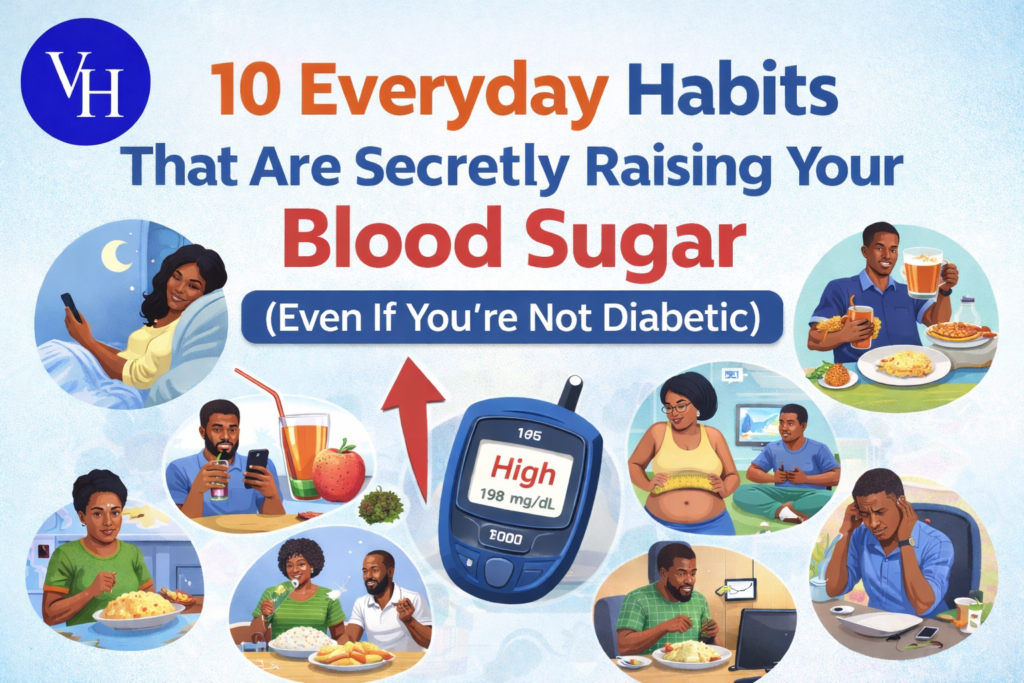
Many people are unaware that everyday habits that raise blood sugar can slowly damage metabolic health long before diabetes is diagnosed. In reality, everyday habits that raise blood sugar are common in many homes—often developing quietly, without obvious symptoms.
Across Nigeria and other African communities, rising rates of prediabetes, type 2 diabetes, fatty liver disease, and metabolic syndrome show that blood sugar problems often begin years before a formal diagnosis is made (World Health Organization, 2024). Poor dietary patterns, chronic stress, sleep deprivation, and physical inactivity are silently pushing blood sugar levels higher—even in children and young adults.
The danger is not just diabetes itself, but the long-term damage uncontrolled blood sugar causes to the heart, kidneys, nerves, eyes, and liver (NHS, 2023). According to the NHS, early kidney disease often has no obvious symptoms, which is why many people only discover kidney damage after routine blood or urine tests reveal abnormalities.
In this guide, we break down 10 everyday habits that are secretly raising your blood sugar, explain why they are harmful, and show what you can do to regain control—before serious health problems develop. These everyday habits that raise blood sugar often go unnoticed until serious metabolic problems develop.
Table of Contents
ToggleWhat Does “High Blood Sugar” Really Mean?
Blood sugar (glucose) is the main fuel your body uses for energy. It comes primarily from carbohydrates in foods such as rice, garri, bread, yam, pasta, fruits, and sugary drinks. The NHS identifies diabetes and high blood pressure as the two most common causes of chronic kidney disease, due to long-term damage to the kidneys’ filtering units.
When blood sugar rises too high too often:
The body becomes less responsive to insulin (insulin resistance)
The pancreas becomes overworked
Excess glucose is stored as belly fat
Inflammation increases throughout the body
Over time, repeated exposure to everyday habits that raise blood sugar increases insulin resistance and diabetes risk. (American Diabetes Association, 2024). These everyday habits that raise blood sugar often go unnoticed until serious metabolic problems develop.
These everyday habits that raise blood sugar often go unnoticed until serious metabolic problems develop..
1. Skipping Breakfast or Eating Late at Night
Skipping breakfast is often promoted as a weight-loss strategy, but for many people—especially those already insulin resistant—it can backfire.
When you skip meals:
Blood sugar drops too low
Stress hormones (cortisol) rise
The liver releases stored glucose into the bloodstream
You overeat later in the day
Late-night eating further worsens the problem. Insulin sensitivity is lowest at night, meaning glucose stays longer in the blood (NIH, 2023).
Result: Higher fasting blood sugar the next morning.
👉 Intermittent Fasting Explained: Is It Safe for Africans With Diabetes?
2. Drinking Sugary “Healthy” Drinks
Many people unknowingly consume large amounts of sugar through drinks they consider healthy:
Packaged fruit juice
Smoothies without protein or fibre
Malt drinks
Sweetened zobo or kunu
Liquid sugar enters the bloodstream very quickly, causing sharp blood sugar spikes (CDC, 2023).
Even natural sugars from fruit juice lack fibre, making them metabolically similar to soft drinks.
Better option: Eat whole fruit, add protein, or drink water.
3. Excess White Rice, Garri, Bread & Swallows
Refined carbohydrates dominate many African diets:
White rice
White bread
Semovita, garri, fufu
Processed cereals
These foods have a high glycaemic index, meaning they raise blood sugar rapidly.
Frequent large portions lead to:
Repeated insulin spikes
Increased belly fat
Greater diabetes risk
According to the WHO (2024), diets high in refined carbohydrates are a major driver of diabetes in low- and middle-income countries.
4. Constant Snacking Without Protein
Snacking on biscuits, chin-chin, crackers, or sweets between meals keeps insulin constantly elevated.
Without protein or healthy fat:
Blood sugar rises quickly
Drops soon after
Triggers hunger and cravings
This cycle worsens insulin resistance over time (ADA, 2024).
Better snacks: eggs, nuts, yoghurt, beans, avocado.
5. Chronic Stress & Emotional Pressure
Stress is a major but overlooked cause of high blood sugar.
When stressed, the body releases cortisol, which:
Raises blood glucose
Promotes fat storage (especially belly fat)
Blocks insulin action
Long-term stress is strongly linked to diabetes, high blood pressure, and obesity (NIH, 2023).
6. Poor Sleep or Sleep Apnoea
Sleeping less than 6 hours per night:
Reduces insulin sensitivity
Increases appetite hormones
Raises fasting blood sugar
Sleep apnoea—common in overweight individuals—further increases diabetes risk (NHS, 2023).
7. Sitting for Long Hours
Physical inactivity means glucose stays in the bloodstream instead of being used by muscles.
Even short walks after meals can:
Lower post-meal blood sugar
Improve insulin sensitivity
Reduce diabetes risk (CDC, 2023)
8. Belly Fat & Insulin Resistance
Belly fat is not just cosmetic—it is metabolically active.
Visceral fat releases inflammatory chemicals that:
Block insulin
Raise blood sugar
Increase fatty liver risk
This explains why many people with “normal weight” but large waistlines develop diabetes.
👉 Type 2 Diabetes: Understanding Blood Sugar, Lifestyle & Long-Term Prevention
9. Alcohol & Sweetened Beverages
Alcohol disrupts glucose control by:
Damaging the liver
Increasing appetite
Promoting fat storage
Sugary alcoholic drinks worsen insulin resistance further (WHO, 2024).
10. Ignoring Early Warning Signs
Many people ignore symptoms such as:
Frequent urination
Excess thirst
Fatigue
Blurry vision
Slow wound healing
By the time diabetes is diagnosed, damage may already be present. These everyday habits that raise blood sugar often go unnoticed until serious metabolic problems develop.
👉 Early Signs of Diabetes You Should Not Ignore
How to Lower Blood Sugar Naturally (Starting Today)
Small, consistent changes matter more than extreme diets.
Practical steps:
Eat balanced meals (protein + fibre + healthy fat)
Walk daily (especially after meals)
Reduce sugary drinks
Prioritise sleep
Manage stress intentionally
Monitor waist circumference, not just weight
Final Thoughts
High blood sugar does not appear overnight. It develops quietly through everyday habits that raise blood sugar, many of which feel normal in modern life.
The good news? Early awareness and lifestyle changes can prevent or even reverse prediabetes, protect organs, and restore metabolic health. NHS guidance shows that maintaining a healthy weight, reducing sugar intake, improving sleep quality, and increasing daily physical activity can help stabilise blood sugar levels and reduce the risk of diabetes and kidney disease.
At VeeVee Health, our mission is to help you understand your body, make informed choices, and take control—one habit at a time. These everyday habits that raise blood sugar often go unnoticed until serious metabolic problems develop.
Book a 1-to-1 consultation with VeeVee Health for personalised blood sugar and diabetes guidance.
References
American Diabetes Association (2024). Standards of Medical Care in Diabetes.
Centers for Disease Control and Prevention (CDC) (2023). Diabetes and Insulin Resistance.
National Health Service (NHS) (2023). Type 2 Diabetes Overview.
National Institutes of Health (NIH) (2023). Sleep, Stress, and Metabolic Health.
World Health Organization (WHO) (2024). Diabetes and Obesity Fact Sheet.
FAQs: Everyday Habits That Raise Blood Sugar
These everyday habits that raise blood sugar often go unnoticed until serious metabolic problems develop.
Indeed I read and learn alots not, becauseots of people do these everyday without knowing it’s killing them slowly,thank verver health
Thanks for your response
High blood sugar rises quickly without protein or healthy fats.
Thanks for your response
Some of the most common habit that raises blood sugar are namely : drinking sugary brevareges, skipping meals,eating large portions or refined carbohydrates and also sitting for long.
High blood sugar is the most deadly and it’s can kill quickly
Seeing diabetics patients makes feel bad because 8 knows what dey went through because it’s can be averted by eating less sugar ,stop fizzy drinks and sop taking juck foods
Tbaks veevee health
Seeing sugar patients makes me feel bad because 8 knows what dey went through because it’s can be averted by eating less sugar ,stop fizzy drinks and sop taking juck foods
Tbaks veevee health
Pingback: 8 Unhealthy Foods Nigerian Children Eat Today