
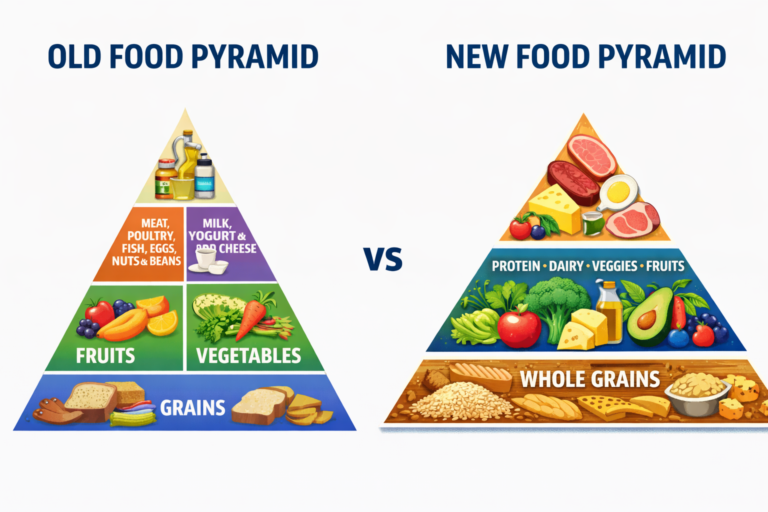
The new food pyramid released in January 2026 marks a major shift in global nutrition advice, placing real, whole foods at the centre of healthy eating. A newly released food pyramid is reshaping how governments and health experts talk about healthy eating, with a renewed focus on real, whole foods rather than highly processed products.
The updated model follows the release of the Dietary Guidelines for Americans 2025–2030, announced on 7 January 2026, and represents one of the most significant shifts in official nutrition advice in decades. According to health officials, the goal is to address the growing global burden of diet-related diseases such as obesity, type 2 diabetes, high blood pressure, and heart disease.
Major international news organisations including BBC News, The Guardian, TIME Magazine, ABC News, and the Associated Press have all reported on the changes, highlighting how the new pyramid moves away from older carbohydrate-heavy guidance.
Table of Contents
ToggleWhat Has Changed in the New Food Pyramid?
For decades, traditional food pyramids placed grains and carbohydrates at the base, encouraging them as the foundation of daily meals. The new food pyramid reverses that emphasis.
According to coverage by TIME Magazine, the updated guidance prioritises protein, fruits, vegetables, dairy, and healthy fats, while grains are no longer the dominant base of the pyramid (TIME, 2026).
Similarly, ABC News reports that the new model encourages Americans to focus on foods “closer to their natural form” and to reduce consumption of ultra-processed foods high in added sugars and refined carbohydrates (ABC News, 2026).
At the heart of the update is a simple message repeated across multiple reports:
eat real food.
Protein, Healthy Fats and Dairy Take Priority
One of the most notable changes is the stronger emphasis on protein at every meal. The new pyramid highlights sources such as fish, eggs, lean meats, beans, and lentils, recognising their role in blood sugar control, muscle maintenance, and appetite regulation.
The Guardian notes that this shift reflects growing concern over rising insulin resistance and metabolic disease, particularly in countries where diets are dominated by refined carbohydrates (The Guardian, 2026).
Healthy fats from natural sources such as olive oil, avocados, nuts, and seeds are also clearly included. Full-fat dairy products, when unsweetened and minimally processed, appear once again as part of a balanced diet — a move that has sparked both praise and debate among nutrition experts.
Fruits and Vegetables Remain Central
Despite the changes, fruits and vegetables continue to hold a prominent place in the pyramid. Reporting by BBC News highlights that government health advisers remain united on the importance of plant-based foods for fibre intake, gut health, and disease prevention (BBC News, 2026).
The emphasis is not just on quantity but on variety, encouraging people to consume a wide range of colours and types of fruits and vegetables.
Less Focus on Ultra-Processed Foods
Another key theme reported by the Associated Press is the strong discouragement of ultra-processed foods. These include packaged snacks, sugary drinks, and foods with long ingredient lists containing additives and preservatives (AP News, 2026).
Health officials cited by the AP describe ultra-processed foods as a major contributor to rising rates of obesity and chronic illness, particularly among children and low-income populations.
Mixed Reactions From Health Experts
While many public-health advocates have welcomed the new approach, the changes have not been without controversy.
The Washington Post reports that some nutrition scientists have expressed concern about the increased visibility of red meat and full-fat dairy, warning that excessive intake could still pose risks for heart health if not balanced appropriately (Washington Post, 2026).
Others argue that the emphasis on food quality rather than strict macronutrient targets is a more realistic and sustainable approach for the general population.
Why This Matters Beyond the United States
Although the food pyramid was released as part of U.S. dietary guidance, its influence extends far beyond America. Many countries look to U.S. nutrition policy when shaping their own public-health recommendations.
For individuals living with diabetes, high blood pressure, or weight-management challenges, the new pyramid reinforces the importance of moving away from refined carbohydrates and heavily processed foods toward balanced, whole-food meals.
A Simple Takeaway
A Simple Takeaway
Across all news reports, one message remains consistent:
If it looks like food, grows like food, and is minimally processed, it should form the foundation of your diet.
The new food pyramid is less about rigid rules and more about returning to basics — real food, balanced meals, and long-term health.