
Table of Contents
ToggleA Growing Crisis Beyond Obesity
As rates of overweight and obesity continue to rise globally, so does the pressure to lose weight quickly. In recent years, this pressure has driven an unprecedented surge in the use of weight loss injections, often referred to as weight loss jabs. Medications originally developed for diabetes management are now widely promoted as fast solutions for weight loss.
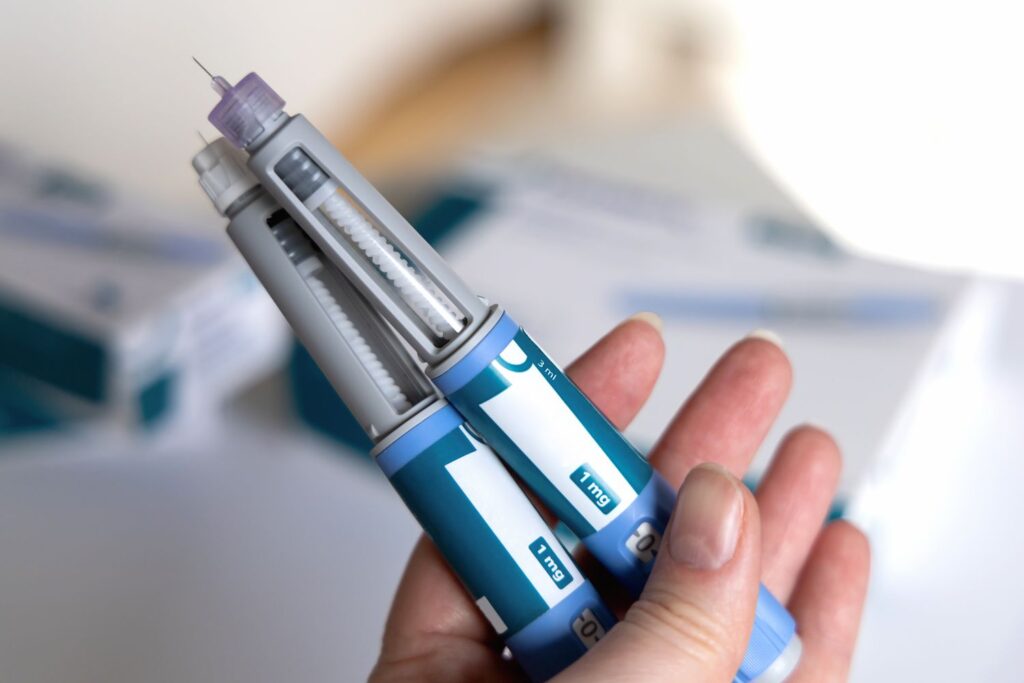
While these injections may appear effective in the short term, an important question is being overlooked: are we solving obesity, or creating a new long-term health crisis?
Public health experts increasingly warn that relying on medication alone—without addressing lifestyle, diet, and metabolic health—may carry serious long-term consequences (World Health Organization, 2024).
What Are Weight Loss Jabs?
Weight loss jabs are typically GLP-1 receptor agonists, a class of medications that mimic the hormone glucagon-like peptide-1. These drugs reduce appetite, slow stomach emptying, and influence insulin release, leading to reduced calorie intake and weight loss.
They were originally prescribed for type 2 diabetes, but their off-label and cosmetic use for weight loss has expanded rapidly (NHS, 2024).
Types of Weight Loss Jabs: What Are People Actually Using?
Several injectable medications are now commonly referred to as “weight loss jabs.” While they are often grouped together, they differ in approved use, dosage, and long-term safety evidence. Most belong to a drug class known as GLP-1 receptor agonists.
Below are the most widely used types.
1. Ozempic (Semaglutide)
Ozempic was originally approved for the treatment of type 2 diabetes, not weight loss. However, due to its appetite-suppressing effect, it has become widely used off-label for weight reduction.
How it works:
Reduces appetite
Slows stomach emptying
Improves short-term blood sugar control
Public health concerns:
Off-label use without diabetes
Nausea, vomiting, and muscle loss
High risk of weight regain when stopped
Health authorities have warned against widespread cosmetic use due to supply shortages for diabetic patients and lack of long-term safety data in non-diabetic populations (NHS, 2024).
2. Wegovy (Semaglutide – Higher Dose)
Wegovy contains the same active ingredient as Ozempic, but at a higher dose and is specifically licensed for chronic weight management.
Key differences from Ozempic:
Approved for obesity treatment
Stronger appetite suppression
Higher incidence of side effects
Clinical trials show significant short-term weight loss, but studies also report substantial weight regain after discontinuation, particularly without lifestyle change (Wilding et al., 2022).
3. Saxenda (Liraglutide)
Saxenda is another GLP-1 injection approved for weight loss and has been in use longer than Wegovy.
Key features:
Requires daily injections
Modest weight loss compared to newer drugs
Higher rates of nausea and gastrointestinal side effects
Long-term adherence is often poor, raising concerns about sustainability and metabolic rebound once treatment stops (ADA, 2024).
4. Mounjaro / Zepbound (Tirzepatide)
These newer injections act on two hormonal pathways (GLP-1 and GIP), making them more potent than earlier drugs.
Potential benefits:
Greater initial weight loss
Improved blood sugar control
Major concerns:
Limited long-term safety data
Higher cost and accessibility issues
Risk of dependency on medication for appetite control
Experts caution that stronger appetite suppression may increase the risk of nutrient deficiency and muscle loss if not carefully managed (NIH, 2024).
Why the Brand Matters Less Than the Long-Term Impact
While brand names differ, the core issue remains the same:
most weight loss jabs treat appetite, not the root causes of metabolic dysfunction.
Across all brands, studies consistently show:
Weight loss slows or reverses after stopping injections
Metabolic health does not automatically improve
Lifestyle change is still required for long-term success
According to the World Health Organization, medication-based weight loss should never replace comprehensive lifestyle and public-health interventions (WHO, 2024).
The Promised Benefits: Why So Many People Are Turning to Jabs
Supporters of weight loss injections often highlight benefits such as:
Rapid weight reduction
Improved short-term blood sugar control
Reduced appetite and food cravings
Clinical trials do show initial weight loss, particularly within the first 6–12 months of use (American Diabetes Association, 2024). For individuals with severe obesity and diabetes, these medications may have a place under strict medical supervision.
However, benefits alone do not tell the full story.
A Growing Public Health Question
As more people turn to Ozempic, Wegovy, Saxenda, and newer injections, an urgent question emerges:
Are we addressing obesity — or creating long-term medication dependence with new health risks?
Without proper education, medical supervision, and lifestyle change, the widespread use of weight loss jabs may contribute to future metabolic, hormonal, and nutritional problems, particularly in vulnerable populations.
The Hidden Risks: What Happens Beneath the Weight Loss
As use increases, reports of adverse effects are becoming more common. These include:
Chronic nausea, vomiting, and digestive distress
Loss of lean muscle mass rather than fat
Nutrient deficiencies due to reduced food intake
Gallbladder disease and increased risk of gallstones
Hormonal disruption and fatigue
Rapid weight loss without adequate nutrition can impair metabolic function rather than restore it (Hall et al., 2015).
The Long-Term Impact on Metabolic Health
This is where the real concern lies.
Metabolic health refers to how efficiently the body regulates blood sugar, insulin, lipids, inflammation, and energy balance. Sustainable weight loss should improve these systems—not weaken them.
Emerging evidence suggests that when weight loss jabs are stopped:
Appetite often rebounds aggressively
Weight regain is common
Insulin resistance may worsen
Fat often returns preferentially to the abdomen
Studies show that most people regain a significant portion of lost weight within one year of discontinuation if lifestyle changes are not established (Wilding et al., 2022).
This creates a dangerous cycle of:
weight loss → medication dependence → rebound weight gain → worsened metabolic health
Are We Treating Symptoms Instead of the Root Cause?
Obesity is rarely just about calories. It is closely linked to:
Chronic inflammation
Stress and sleep disruption
Focusing solely on weight reduction without correcting these drivers may mask disease progression rather than reverse it (Després, 2012).
Special Concerns for African & Diaspora Communities
Across African communities—both on the continent and in the diaspora—rates of obesity, diabetes, and hypertension are rising rapidly (WHO, 2024).
The growing availability of weight loss jabs raises unique concerns:
Limited access to long-term medical monitoring
Cultural dietary patterns being ignored
Increased misuse without prescription
Financial pressure to stay on medication indefinitely
Without strong public health education, these medications risk becoming shortcuts with long-term consequences.
Weight Loss vs True Health: A Critical Distinction
True health is not defined by the number on the scale. It is reflected in:
Stable blood sugar
Healthy liver function
Balanced hormones
Sustainable energy levels
According to the National Health Service, long-term weight management must prioritise diet quality, physical activity, sleep, and mental wellbeing, not medication alone (NHS, 2023).
Who Should Be Cautious About Weight Loss Jabs?
Weight loss injections may not be suitable for:
Individuals seeking cosmetic weight loss only
Those unwilling or unable to change diet and lifestyle
People with a history of eating disorders
Those without long-term medical follow-up
Medication should never replace foundational health behaviours.
Serious and Potentially Fatal Reactions Reported
In addition to common side effects such as nausea and vomiting, there have been real-world reports of serious health consequences linked to weight-loss injections. In the United Kingdom, data collected by medical agencies and reported by major news outlets show that hundreds of people have been rushed to hospital with severe reactions after using GLP-1-based weight loss jabs such as Ozempic, Wegovy, and Mounjaro. In the first 11 months of 2025, 133 suspected side effect cases were reported, including three deaths following administration of these injections, according to recent data cited in UK media reporting. The Sun
Concerns over acute pancreatitis and other potentially fatal complications have also been highlighted. The UK’s Medicines and Healthcare products Regulatory Agency (MHRA) has linked hundreds of pancreatitis cases — including multiple deaths — with the use of GLP-1 medications, though it stressed that causality is not established. Sky News
Experts have additionally warned against purchasing weight loss jabs from unregulated online sources or social media platforms, where counterfeit or incorrectly dosed products can cause life-threatening outcomes. The Guardian
Side Effects Beyond the Clinic
Beyond nationally reported hospital cases, individual stories have emerged illustrating the dangers of unregulated use. One UK-based case involved a young woman who was hospitalised after severe pain and vomiting allegedly linked to an illegal weight-loss injection, underscoring the potential risks of unsupervised use outside medical settings. The Sun
Further reporting has linked use of weight loss jabs to less common but serious conditions such as haemorrhoids and gastrointestinal distress, which in rare cases can mimic symptoms associated with more serious disease processes. The Scottish Sun
Healthier, Sustainable Alternatives
Research consistently shows that gradual, lifestyle-based approaches improve metabolic health more reliably than rapid weight loss (Alberti et al., 2009).
Effective long-term strategies include:
Balanced, culturally appropriate nutrition
Regular physical activity
Blood sugar stabilisation
Stress reduction
Adequate sleep
These approaches improve insulin sensitivity, reduce visceral fat, and protect organs such as the liver and heart.
Conclusion: Are Weight Loss Jabs a Solution—or a Warning?
Weight loss jabs may offer short-term results, but without lifestyle change, they risk creating long-term metabolic damage and medication dependence.
As obesity rates climb, society must ask:
Are we investing in true health—or chasing rapid weight loss at any cost?
The future of public health depends on choosing sustainable metabolic health, not shortcuts.
Frequently Asked Questions (FAQs)
Are weight loss jabs safe long term?
Do people regain weight after stopping injections?
Can weight loss jabs improve metabolic health?
Are weight loss injections suitable for everyone?
References
Alberti, K.G.M.M. et al. (2009) ‘Harmonizing the metabolic syndrome’, Circulation, 120(16), pp. 1640–1645.
American Diabetes Association (2024) Standards of Care in Diabetes.
Després, J.P. (2012) ‘Body fat distribution and risk of cardiovascular disease’, Circulation, 126(10), pp. 1301–1313.
Hall, J.E. et al. (2015) ‘Obesity-induced hypertension’, Circulation Research, 116(6), pp. 991–1006.
National Health Service (2023) Obesity and Weight Management. Available at: https://www.nhs.uk
Wilding, J.P.H. et al. (2022) ‘Weight regain after GLP-1 therapy’, Diabetes, Obesity and Metabolism, 24(8), pp. 1553–1561.
World Health Organization (2024) Obesity and Metabolic Health. Available at: https://www.who.int
American Diabetes Association (2024) Standards of Care in Diabetes.
National Health Service (2024) Weight loss injections and obesity treatment. Available at: https://www.nhs.uk
Wilding, J.P.H. et al. (2022) ‘Weight regain after semaglutide withdrawal’, Diabetes, Obesity and Metabolism, 24(8), pp. 1553–1561.
National Institutes of Health (2024) GLP-1 receptor agonists and metabolic effects.
World Health Organization (2024) Obesity and pharmacological interventions. Available at: https://www.who.int
Three UK fat jab users die & 133 rushed to hospital after suspected side effects, The Sun Health (3 January 2026). Data show 133 suspected side effects and three deaths linked with weight-loss injections such as Wegovy, Ozempic, and Mounjaro. The Sun
Weight loss and diabetes jabs linked to potentially fatal side effect, Sky News (26 June 2025). Report citing UK MHRA figures showing reported cases of acute/chronic pancreatitis and multiple deaths associated with GLP-1 drugs including Wegovy and Ozempic. Sky News
UK medical regulator warns against buying weight-loss jabs from social media channels, The Guardian (29 December 2025). Highlights official safety warnings against unregulated sources of weight-loss injections due to contamination and dosing risks. The Guardian
Mum, 31, left ‘screaming in pain and vomiting blood’ after using fat jabs to slim down, The Sun (date unspecified). Report of a hospitalised case linked to unregulated weight-loss injections. The Sun
New horror side effect plaguing fat jab fanatics as cases surge, The Scottish Sun (recent). Discussion of gastrointestinal and haemorrhoid side effects experienced by some weight-loss jab users. The Scottish Sun